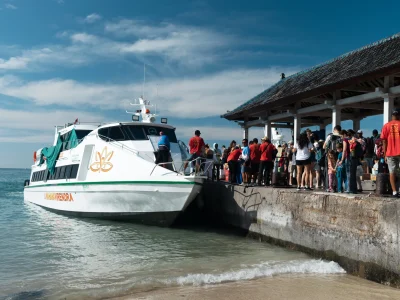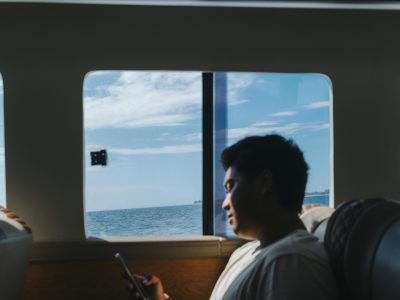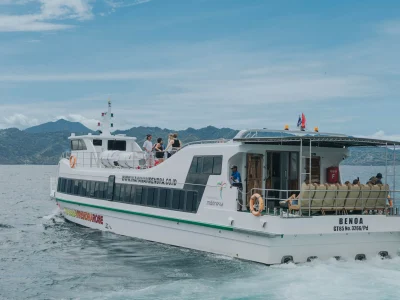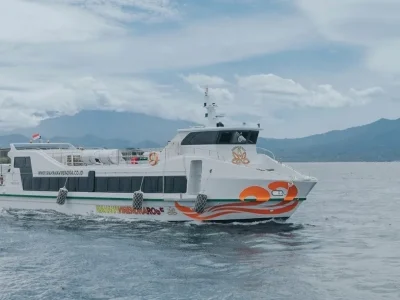
When planning a tropical getaway that requires island hopping, choosing the right maritime transport can completely change your travel experience. Many travelers often find themselves looking at different ticket options and wondering: what is the difference between a fast ferry and a conventional ferry?
While both vessels serve the primary purpose of getting you across the water, they differ drastically in engineering and experience. Understanding these core differences will help you choose the best option for your next ocean crossing.
The 5 Core Differences You Need to Know
To help you make the right choice for your itinerary, we can break down the distinctions into five fundamental categories:
1. Speed and Travel Duration
The most obvious difference is the clock. A conventional ferry moves at a slow, steady pace, often taking 4 to 6 hours to cross channels like the Lombok Strait. On the other hand, a modern fast ferry cuts that travel time by more than half, usually completing the same journey in just 90 minutes, allowing you to maximize your vacation days.
2. Hull Design and Wave Slicing Technology
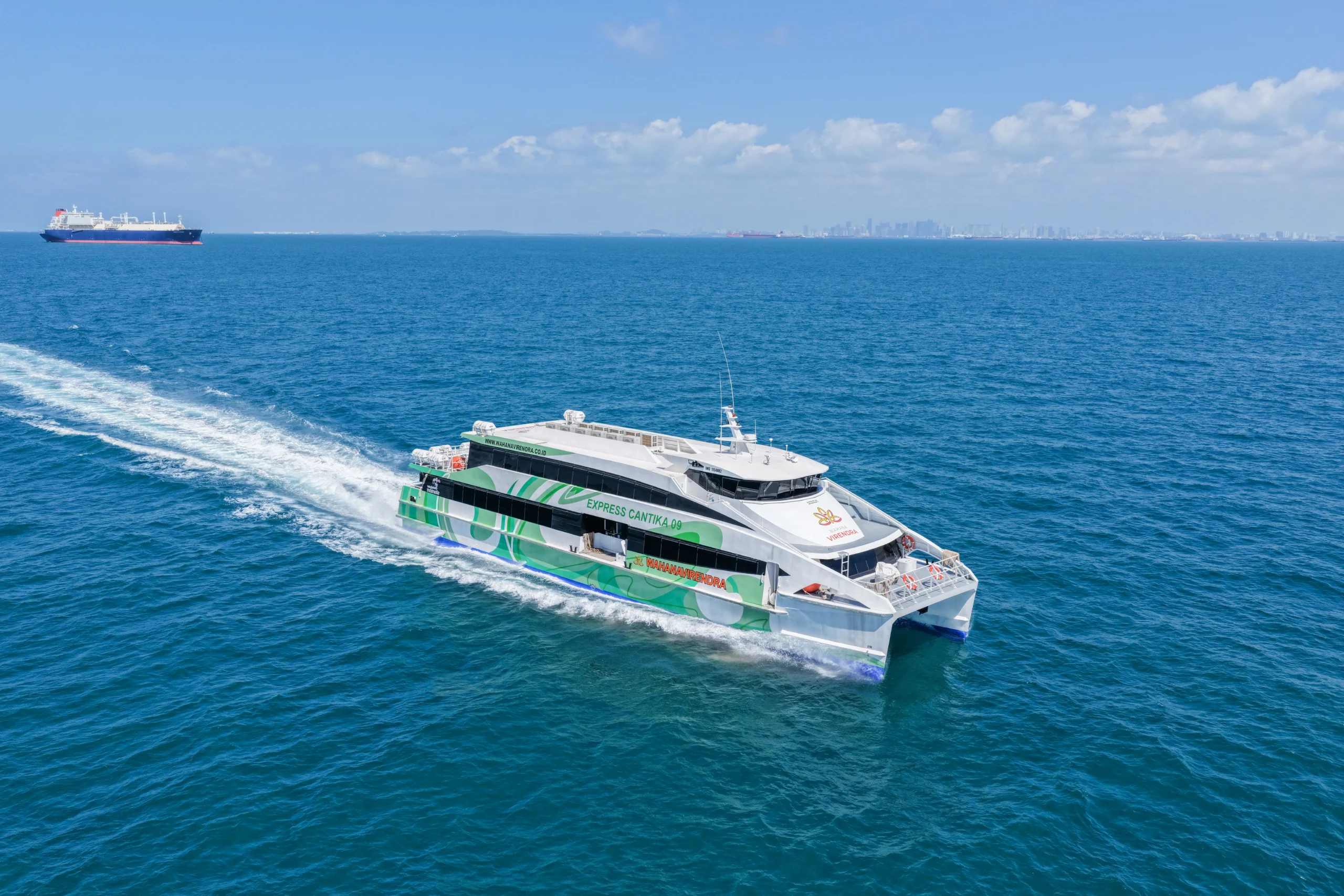
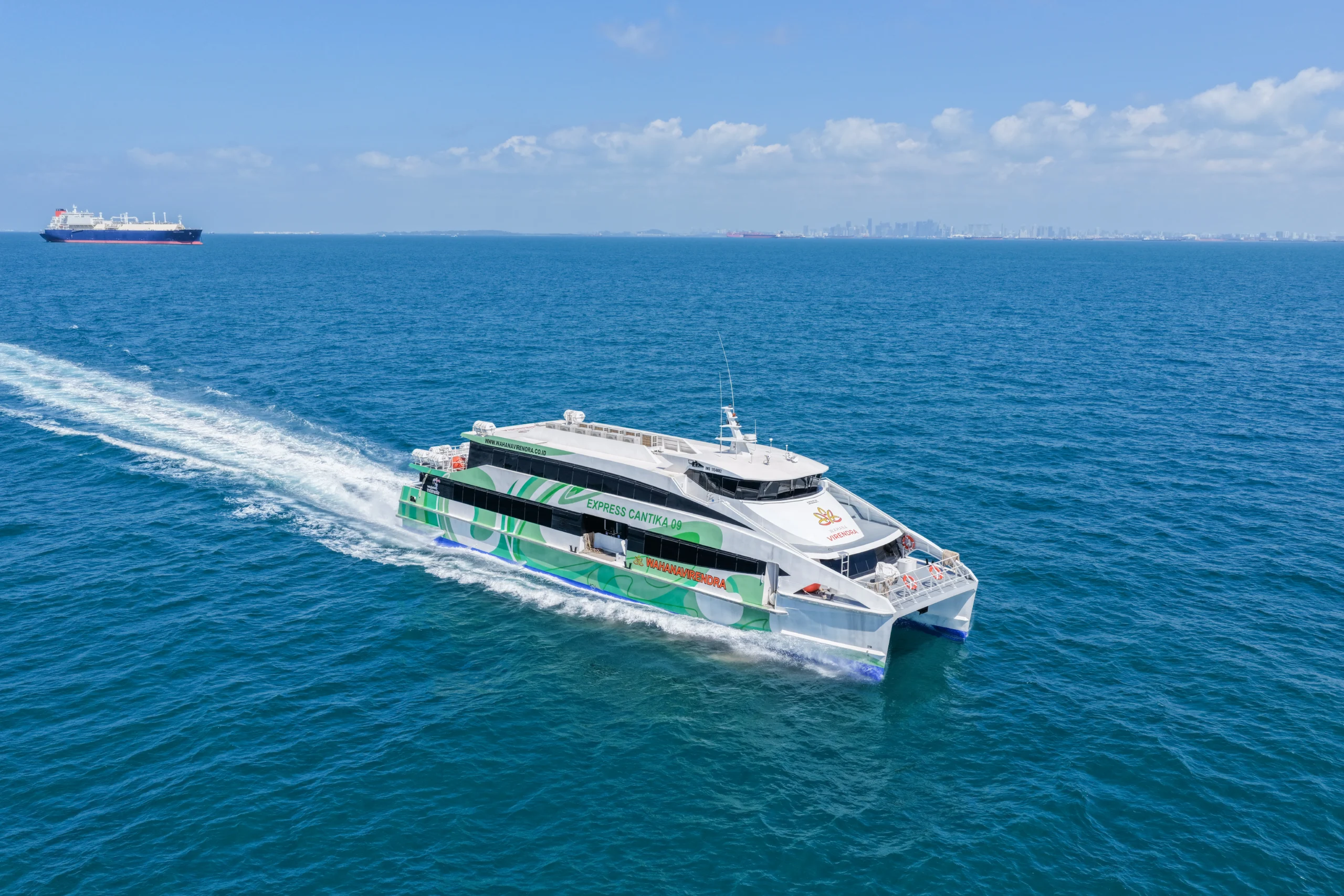
Conventional ferries use heavy, single-hull displacement designs meant to push through the water. A fast ferry, however, utilizes advanced hull shapes, such as catamarans (dual-hull) combined with lightweight materials like marine-grade aluminum. Instead of riding over the waves, a high-speed catamaran slices through them, resulting in a much smoother ride.
3. Motion Sickness and Marine Stability
Because conventional ferries have a high center of gravity to accommodate vehicles, they are prone to a slow rolling motion caused by ocean swells, which often triggers sea sickness. A modern fast ferry engineered with twin hulls offers superior lateral stability. This drastically reduces rolling and pitching, keeping passengers steady and comfortable.
4. Passenger-Centric Facilities vs. Cargo Focus
Conventional ferries are built as multi-purpose utility vessels, their primary layout prioritizes large open decks for trucks, cars, and heavy cargo, leaving basic, often crowded seating for passengers. Conversely, a fast ferry is designed exclusively for passengers. Every square inch of the cabin is optimized for comfort, featuring climate control, premium seating, and modern entertainment.
5. Boarding Efficiency and Port Logistics
Loading hundreds of vehicles onto a conventional ferry is a time-consuming process that requires complex port logistics and long waiting lines. Boarding a fast ferry is much more streamlined. Passengers can check in quickly and walk directly onto the vessel via modern floating docks, ensuring a punctual and stress-free departure.
Direct Comparison: Fast Ferry vs. Conventional Ferry
| Feature | Fast Ferry | Conventional Ferry |
| Average Speed | 25 – 40 Knots (Very Fast) | 10 – 15 Knots (Slow) |
| Crossing Time | Approx. 1.5 Hours | 4 to 6 Hours |
| Hull Engineering | Lightweight Aluminum Catamaran | Heavy Steel Single-Hull |
| Sea Sickness Risk | Low (High Stability) | High (Prone to Rolling) |
| Primary Payload | Passengers & Luggage | Vehicles, Cargo, & Commuters |
| Boarding Process | Fast & Streamlined | Slow (Vehicle Loading) |
| On-board Luxury | Premium (AC, TV, Luxury seats) | Basic (Standard or open-air) |
Here is a quick-reference guide summarizing how the two vessel types compare:
Wahana Virendra Cantika: The Ultimate Fast Ferry Experience
If you want to experience the absolute peak of fast ferry technology, look no further than the Wahana Virendra Cantika. This vessel perfectly illustrates why high-speed sea travel has become the preferred choice for international tourists traveling between Bali and Lombok.
Advanced Aluminum Catamaran Hull
The Wahana Virendra Cantika features a specialized dual-hull structure. This advanced engineering significantly minimizes the impact of rough swells, making it the ideal fast ferry choice for travelers who want to enjoy the scenic journey without worrying about motion sickness.
READ MORE: Is a Fast Boat to Senggigi Faster? A Route Comparison Guide
Executive-Class Onboard Facilities
The Cantika treats your island crossing like a luxury cruise. Passengers traveling on this premium fast ferry can enjoy top-tier amenities, including:
- Spacious Ergonomic Seats: Complete with footrests so you can stretch out and relax.
- Climate-Controlled Cabins: Powerful air conditioning that keeps the tropical heat at bay.
- State-of-the-Art Entertainment: Multi-screen televisions and premium indoor sound systems.
- Uncompromised Safety: Outfitted with international-standard life rafts, life jackets, and an expert crew.
Conclusion
So, what is the difference? A conventional ferry is a utility transport meant for heavy cargo and slow commuting, while a fast ferry is a finely-tuned speed machine designed to protect your time and comfort. By opting for a premium vessel like the Wahana Virendra Cantika, you turn a long, tiring sea crossing into a swift, enjoyable part of your holiday.
To ensure you lock in the best rates and avoid third-party markups, make sure to book your tickets through the official website or the official Wahana Virendra WhatsApp. Booking directly guarantees instant ticket confirmation and a reliable, world-class fast ferry experience.